Childhood and Special Education (Grades 1-6 and SpEd 1-6 Cert)
Free on-campus housing
To make the dream of becoming a teacher more affordable
As part of the Build the Teacher Pipeline Initiative aimed at addressing the nationwide teacher shortage, beginning in fall 2023, all new first-year and transfer students who major in our teacher- and special-education bachelor’s degree programs will receive free on-campus housing throughout their time in the residence halls (up to four academic years).
Choose Saint Rose for Childhood & Special Education (Grades 1-6 & SPED 1-6 CERT)
Teachers can have a significant impact on a child’s life, especially those in grades first through sixth with special learning needs.
Unlike other institutions, The College of Saint Rose doesn’t just treat childhood education like a major. The Thelma P. Lally School of Education draws on an impressive pool of dedicated resources, facilities, and faculty to produce teachers who are consistently sought after by school districts.
Students enjoy superlative classroom instruction in this dual certification education program from professors who are experts. Students must complete more than 150 hours of fieldwork in local districts and in different teaching areas before earning the opportunity to lead their own classrooms.
Get Dual Certification in Elementary Education & Special Education
The Bachelor of Science in Elementary Education and Special Education — informally known as the SEED program, requires comprehensive coursework in a variety of disciplines to help students learn the type of teaching and collaboration expected in schools nationwide.
The coursework and expectations set by Saint Rose and its professors helps to set the students down the path towards becoming an elementary or special education teacher in New York.
Students who graduate with a dual certification in elementary education special education programs offered by Saint Rose are eligible to start work as special education teachers upon completion of all the certification requirements.
According to the U.S. Bureau of Labor Statistics (BLS), New York State has the highest employment level of special education teachers in kindergarten and elementary schools in the entire country, with 18,510 employed as of 2021. The annual mean salary for special education teachers in NY is $83,250, making it a career that is mentally and financially rewarding.
Not all graduates of this program choose to focus solely on special education classrooms. The program also prepares graduates to teach in inclusive classrooms where both general education and special education students learn together.
Those who graduate with a Bachelor of Science in Elementary Education and Special Education may also choose to pursue graduate-level studies. A master’s in education that focuses on special education can help students further their careers while keeping their teaching credentials in good standing in New York.
Future educators who want to grow their portfolio and expand potential career options with a dual certification in elementary education and special education (grades first through sixth) will find that Saint Rose offers an ideal program.
Armed with both academic knowledge and hands-on experience, students will graduate with the necessary confidence to make a positive impact the next generation of learners.
Get Your Guide
Take a deep dive into our education programs. We prepare the next generation of teachers — are you ready to make your mark?
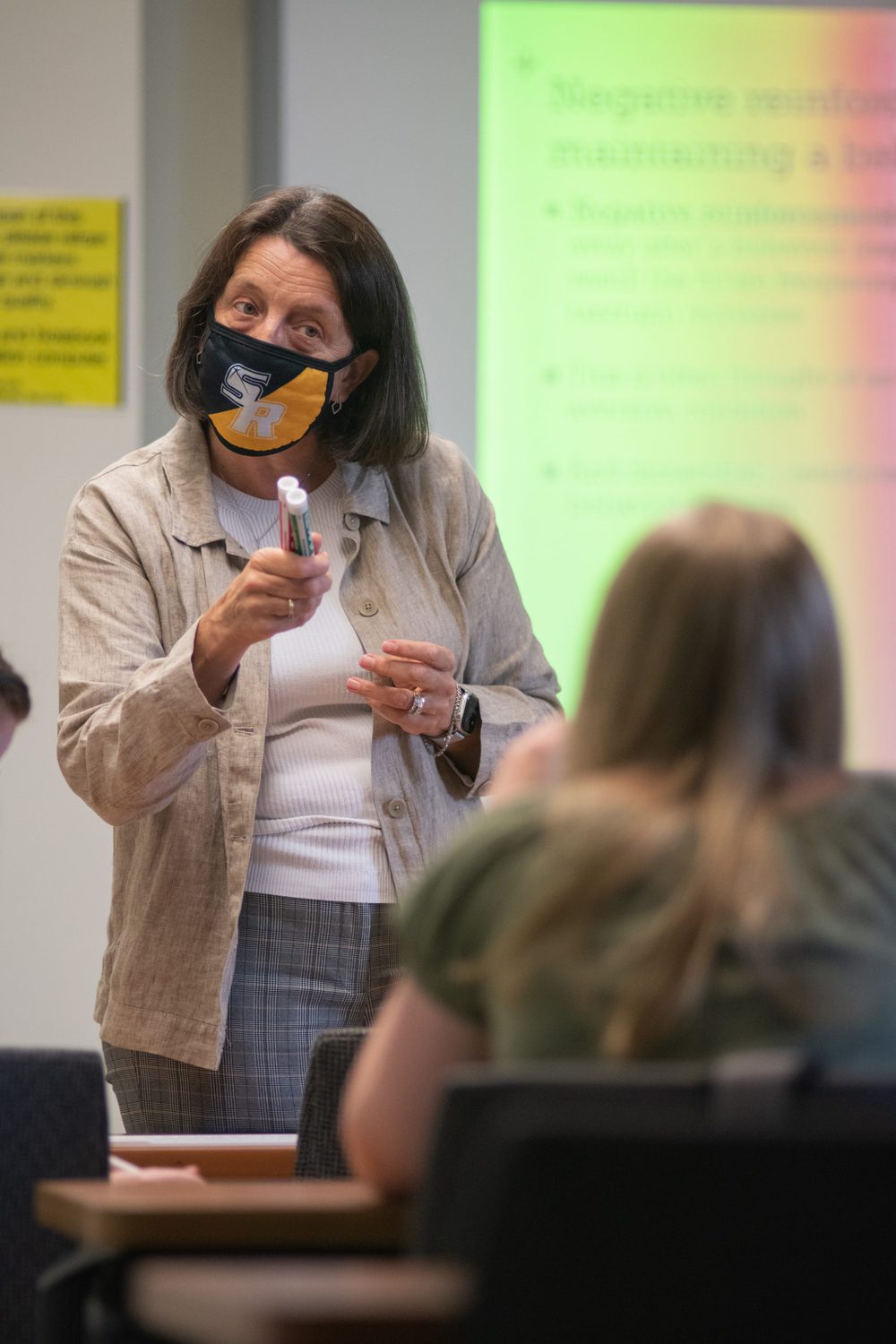
The Child and Adolescent Development class prepares students for the ever-evolving and diverse classrooms they will one day teach. Students research different challenges and opportunities that modern-day teachers face and discuss their research and perspectives with each other. Largely a discussion-based course, students learn from each other’s unique takes and grow from a diverse array of opinions and ideas.
Program Highlights
Gain practical experience in real classrooms at area school districts, including two student-teaching placements in different areas.
Prepare to work with a wide range of students of all learning abilities.
Enjoy a collaborative relationship with local Pk-12 school partners, that often call our College looking for qualified job candidates.
Learn from faculty with practical teaching experience who are also actively involved in schools across the state.
Study robust coursework across various academic disciplines.
Participate in campus-based social and academic experiences with children and adolescents with disabilities.
Gain access to instructional technology used by both professors and students.
Option to add a grades 7-9 extension with just two extra classes (one offered in the summer) and become a more marketable job candidate.
Curriculum and Placements
The dual major in Special Education and Childhood Education is a four-year program of study and practice that leads to a Bachelor of Science in Special Education/Childhood Education and prepares students for teaching in special education settings, general education settings, and inclusive settings that serve children with a range of abilities and needs. Upon the successful completion of this program, the achievement of passing grades on examinations required by the New York State Education Department and fingerprint clearance, students are eligible for New York State initial teaching certification in both childhood (Grades 1-6) and childhood special education (Grades 1-6).
Candidates in professional education programs at The College of Saint Rose will:
Apply principles and theories of lifespan human development and learning in all of its diversity to education, service learning and clinical practice, and demonstrate a capacity and disposition to continuously update that knowledge and, therefore, practice according to the best emerging research in the field.
Plan and implement practice that is rigorous, comprehensive, inclusive, creative and motivating, inviting students’ analytical skills and promoting their dispositions to be lifelong learners.
Ensure that evaluation and decision-making are data-driven, multi-faceted, collaborative and recursive, and align instructional/clinical goals, practice, assessments, and standards.
Develop and demonstrate personal and professional values that foster the highest ethical standards of the profession; intellectual curiosity and open-mindedness; understanding and responsiveness to multiple social and global perspectives; and collegiality and collaboration among partners in the educational or clinical process that involve children, families, community members, and other professionals.
Promote optimal learning opportunities and environments for all individuals in the context of their experiential, cultural, and/or racial/ethnic backgrounds, including, but not limited to learners who are speakers of non-English languages, or who are gifted, have disabilities, are educationally challenged or who have different interests, ambitions or sexual orientations.
Demonstrate in their practice that oral and written language is a functional, as well as social and artistic tool, for communication and thought, and as such reflect the multiple literacies of local, national and global cultures.
Integrate a variety of technological methods and programs to enhance pupil learning and practitioner effectiveness, facilitate candidates’ acquisition of technological skills, and their dispositions to use them.
Acquire and apply the knowledge, skills and dispositions of disciplinesrelevant to candidates’ projected educational or clinical roles.
What Our Alumni Are Saying
Saint Rose Teacher Stories
Four Saint Rose alumni who are teaching or serving administrator roles in schools share why they chose Saint Rose for their teaching degrees, ways that they still feel supported by Saint Rose faculty, and how they continue to apply the lessons learned at the College in their classrooms.
What Our Alumni Are Saying
#WhyITeach
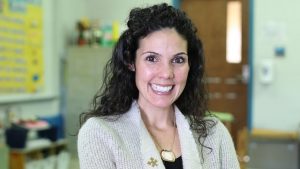
Shannon Peterson '11
Shannon Peterson '11 knew she wanted to work with children with autism after watching her mom during her own early intervention therapy sessions. The Thelma P. Lally School of Education at The College of Saint Rose has built its reputation on developing standout teachers who are fully prepared to lead a classroom and leave a lasting impact on students.
What Our Alumni Are Saying
#WhyITeach
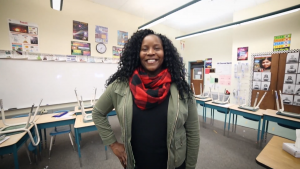
Olaiya Curtis-Morris '95
Olaiya Curtis-Morris '95 has taught 6th Grade at the Albany School of Humanities for 22 years and wants to see every student succeed.
Our faculty are great scholars, but your success is their top priority. Unlike large research institutions, Saint Rose is a place where professors invest in their students and put their energy into teaching, making for compelling classes and great learning outcomes.
Dana AbbottAssociate Professor of Special Education
I have taught special education or literacy at Saint Rose since 2010. My previous experience includes teaching at the University of Connecticut School of Medicine, Post University, University at Albany, and Hudson Valley Community College; I also taught kindergarten and preschool students in Troy, New York. Mt teaching interests include developmental assessment, students with disabilities, and positive behavior supports; I have published or presented on emotional behavioral disorders, and teacher certification and assessment.
Patricia BaldwinAssistant Professor of Teacher Education
I taught elementary students in the Newburgh City School District for eight years before working in higher education and, today, I teach in the childhood education and inclusive early childhood education programs at Saint Rose with my research focusing on those areas and the field experiences of our teacher candidates. I believe that each Saint Rose student brings unique gifts, and that our programs should help prepare them to share those gifts with young children to create quality educational programs in their own classrooms.
Susan V. DeLukeAssociate Professor of Special Education
I am the director of social intervention programs at Saint Rose and consult with school districts across New York State on students with disabilities. I have worked as a school administrator and special education teacher. My teaching interests include behavior supports, assessment, and intervention; emotional, behavior, and mental health concerns for children and youth; and autism spectrum disorders. My research interests include autism spectrum disorder, merging special- and general-education programs, and families advocating for their children with disabilities.
Kristi FragnoliProfessor of Teacher Education
I have over 10 years of public school teaching experience and understand that it’s important to keep up-to-date on the latest in social studies education. I am a consultant for the New York State Archives and an editorial consultant for its magazine, a member of the New York State Education Department Content Advisory Board for Social Studies, and am chair of the New York State Council for History Education. In 2020, I was awarded the New York State Council for Social Studies, Dr. Benita Jorkasky Outstanding College Educator Award. Additionally, I have taught as an assistant professor at the State University at Cortland and was an adjunct at Syracuse University while finishing my doctorate degree at Binghamton University.
Dana AbbottAssociate Professor of Special Education
I have taught special education or literacy at Saint Rose since 2010. My previous experience includes teaching at the University of Connecticut School of Medicine, Post University, University at Albany, and Hudson Valley Community College; I also taught kindergarten and preschool students in Troy, New York. Mt teaching interests include developmental assessment, students with disabilities, and positive behavior supports; I have published or presented on emotional behavioral disorders, and teacher certification and assessment.
Patricia BaldwinAssistant Professor of Teacher Education
I taught elementary students in the Newburgh City School District for eight years before working in higher education and, today, I teach in the childhood education and inclusive early childhood education programs at Saint Rose with my research focusing on those areas and the field experiences of our teacher candidates. I believe that each Saint Rose student brings unique gifts, and that our programs should help prepare them to share those gifts with young children to create quality educational programs in their own classrooms.
Susan V. DeLukeAssociate Professor of Special Education
I am the director of social intervention programs at Saint Rose and consult with school districts across New York State on students with disabilities. I have worked as a school administrator and special education teacher. My teaching interests include behavior supports, assessment, and intervention; emotional, behavior, and mental health concerns for children and youth; and autism spectrum disorders. My research interests include autism spectrum disorder, merging special- and general-education programs, and families advocating for their children with disabilities.
Kristi FragnoliProfessor of Teacher Education
I have over 10 years of public school teaching experience and understand that it’s important to keep up-to-date on the latest in social studies education. I am a consultant for the New York State Archives and an editorial consultant for its magazine, a member of the New York State Education Department Content Advisory Board for Social Studies, and am chair of the New York State Council for History Education. In 2020, I was awarded the New York State Council for Social Studies, Dr. Benita Jorkasky Outstanding College Educator Award. Additionally, I have taught as an assistant professor at the State University at Cortland and was an adjunct at Syracuse University while finishing my doctorate degree at Binghamton University.
Frances IhleAssociate Professor of Special Education
I have taught special education and literacy at Saint Rose since 2011; previous experience includes a doctoral fellowship at the University of Kansas, and being a high-school special-education teacher in Minneapolis, Minnesota. I presently work to prepare students with disabilities for post-secondary success through Project ASPIRE and Project THRIVE, two federally funded grants awarded to Saint Rose in 2010 and 2019.
My research projects and activities focus on academic discourse and teaching adolescents how spoken and written language patterns differ, and executive function coaching to help college students tutor their peers in self-regulation strategies such as planning, organization, and time management.
James KahlerAdjunct Faculty and Student-Teacher Supervisor
I have been affiliated with Saint Rose since 2006 as a student-teacher supervisor and adjunct professor. I have taught classes at both the undergraduate and graduate levels in both the early childhood and childhood departments. I was an elementary school teacher for 33 years, mostly in the primary grades. I have also coached various sports at all levels from modified to varsity. I am very interested in the area of reading instruction and social studies. I have also researched and done my master’s paper on ESL studies.
On a personal note, I have been married for 48 years and have two grown children, a son (41) and a daughter (45) and two terrific grandsons ages 7 and 5. In 2017, I was lucky enough to procure a cabin in the Adirondacks by Whiteface Mountain. I like to do outdoor activities, and my recent adventures have been targeted toward completing the hiking of all 46 High Peaks.
Timothy “Julio” McLaughlinAdjunct Faculty
I am a three-time (4 degrees) alumnus from The College of Saint Rose. The faculty and overall experience as a “Rose Bud” have meant more to me than words can capture; it is both an honor and a privilege to keep that tradition going, helping to develop the next generation of educators. Broadly, I’m an educational generalist. I have taught in public schools and at every level from grade 5 to graduate school.
My background in educational psychology and methodology has equipped me to teach courses in learning, development, classroom assessment, diversity, research, and educational foundations. My specific areas of research are on classroom learning, specifically creativity, motivation, theories of learning, formative assessment, and high-ordered thinking.
Christina PfisterProfessor of Teacher Education
I’m a professor in the Department of Teacher Education at the Lally School of Education at The College of Saint Rose. My research interests include studying the process of becoming a teacher, including mentoring and the experiences of novice teachers. I teach at the undergraduate and graduate levels and serves as an academic advisor.
Frances IhleAssociate Professor of Special Education
I have taught special education and literacy at Saint Rose since 2011; previous experience includes a doctoral fellowship at the University of Kansas, and being a high-school special-education teacher in Minneapolis, Minnesota. I presently work to prepare students with disabilities for post-secondary success through Project ASPIRE and Project THRIVE, two federally funded grants awarded to Saint Rose in 2010 and 2019.
My research projects and activities focus on academic discourse and teaching adolescents how spoken and written language patterns differ, and executive function coaching to help college students tutor their peers in self-regulation strategies such as planning, organization, and time management.
James KahlerAdjunct Faculty and Student-Teacher Supervisor
I have been affiliated with Saint Rose since 2006 as a student-teacher supervisor and adjunct professor. I have taught classes at both the undergraduate and graduate levels in both the early childhood and childhood departments. I was an elementary school teacher for 33 years, mostly in the primary grades. I have also coached various sports at all levels from modified to varsity. I am very interested in the area of reading instruction and social studies. I have also researched and done my master’s paper on ESL studies.
On a personal note, I have been married for 48 years and have two grown children, a son (41) and a daughter (45) and two terrific grandsons ages 7 and 5. In 2017, I was lucky enough to procure a cabin in the Adirondacks by Whiteface Mountain. I like to do outdoor activities, and my recent adventures have been targeted toward completing the hiking of all 46 High Peaks.
Timothy “Julio” McLaughlinAdjunct Faculty
I am a three-time (4 degrees) alumnus from The College of Saint Rose. The faculty and overall experience as a “Rose Bud” have meant more to me than words can capture; it is both an honor and a privilege to keep that tradition going, helping to develop the next generation of educators. Broadly, I’m an educational generalist. I have taught in public schools and at every level from grade 5 to graduate school.
My background in educational psychology and methodology has equipped me to teach courses in learning, development, classroom assessment, diversity, research, and educational foundations. My specific areas of research are on classroom learning, specifically creativity, motivation, theories of learning, formative assessment, and high-ordered thinking.
Christina PfisterProfessor of Teacher Education
I’m a professor in the Department of Teacher Education at the Lally School of Education at The College of Saint Rose. My research interests include studying the process of becoming a teacher, including mentoring and the experiences of novice teachers. I teach at the undergraduate and graduate levels and serves as an academic advisor.
Tammy SchillingerAdjunct Faculty
I have my doctorate in early childhood education, my master’s in elementary education pre-k through 6, and a bachelor’s in psychology. I am certified in elementary education (pre-k through 6) and TESOL pre-k through 12 (Teaching English to Speakers of Other Languages). I have been a teacher for the past 20 years in a school in upstate New York. I am currently an ENL (English as a New Language) teacher and an adjunct professor at The College of Saint Rose in the education department. As an ENL teacher, a big part of my focus is teaching foundational skills focused on phonics and phonemic awareness.
As a college professor, I design and teach early childhood education courses and elementary education courses. I also supervise teachers in the field in pre-k and kindergarten classes. I have experience in teaching grades pre-k through 12. My research areas include critical thinking in all subject areas, the collaboration of speech and ENL teachers, and online learning for ELLs.
Julienne SlichkoAssistant Professor of Special Education
With many years of experience as a special education teacher in Capital District schools, I have helped develop the teaching practicum and was an instructional developer at University at Albany, where I helped faculty teach effectively using online technology. My teaching interests include exceptionality, inclusion, partnerships with families, and assessment. I have published papers on teaching students with disabilities, the use of technology in teaching individuals on the autism spectrum, and comparison of best practices in school districts.
Jennifer SurianoAssistant Professor of Teacher Education
I study teaching and learning, more specifically how instruction is designed and teachers can be prepared to most effectively benefit learners. I have worked most recently to understand the benefits of place-based education for secondary learners.
Saint Rose students will come away from courses with an understanding of best practices and tools to express their passions. I will work with Saint Rose alums and local educators to provide resources through Saint Rose. I look forward to working with faculty across the campus to ensure high-quality instruction for students and fulfilled teachers.
Theresa WardAssociate Professor of Special Education
My areas of emphasis include inclusive education, systems change, differentiated instruction, teacher education, and policy studies.
Tammy SchillingerAdjunct Faculty
I have my doctorate in early childhood education, my master’s in elementary education pre-k through 6, and a bachelor’s in psychology. I am certified in elementary education (pre-k through 6) and TESOL pre-k through 12 (Teaching English to Speakers of Other Languages). I have been a teacher for the past 20 years in a school in upstate New York. I am currently an ENL (English as a New Language) teacher and an adjunct professor at The College of Saint Rose in the education department. As an ENL teacher, a big part of my focus is teaching foundational skills focused on phonics and phonemic awareness.
As a college professor, I design and teach early childhood education courses and elementary education courses. I also supervise teachers in the field in pre-k and kindergarten classes. I have experience in teaching grades pre-k through 12. My research areas include critical thinking in all subject areas, the collaboration of speech and ENL teachers, and online learning for ELLs.
Julienne SlichkoAssistant Professor of Special Education
With many years of experience as a special education teacher in Capital District schools, I have helped develop the teaching practicum and was an instructional developer at University at Albany, where I helped faculty teach effectively using online technology. My teaching interests include exceptionality, inclusion, partnerships with families, and assessment. I have published papers on teaching students with disabilities, the use of technology in teaching individuals on the autism spectrum, and comparison of best practices in school districts.
Jennifer SurianoAssistant Professor of Teacher Education
I study teaching and learning, more specifically how instruction is designed and teachers can be prepared to most effectively benefit learners. I have worked most recently to understand the benefits of place-based education for secondary learners.
Saint Rose students will come away from courses with an understanding of best practices and tools to express their passions. I will work with Saint Rose alums and local educators to provide resources through Saint Rose. I look forward to working with faculty across the campus to ensure high-quality instruction for students and fulfilled teachers.
Theresa WardAssociate Professor of Special Education
My areas of emphasis include inclusive education, systems change, differentiated instruction, teacher education, and policy studies.
Career Outlook
According to NYSUT, New York State will need more than 180,000 teachers in the next decade in both urban and rural districts.
According to Education Week, a Rockefeller Institute of Government report found that teachers in New York State are paid the highest in their field in the United States with the average teacher making $79,588.
Albany City
Berne-Knox-Westerlo
Bethlehem
Cohoes
Green Island
Guilderland
Menands
North Colonie
Ravena-Coeymans-Selkirk
South Colonie
Voorheesville
Watervliet
Chatham
Ichabod Crane
New Lebanon
Taconic Hills
Broadalbin-Perth
Johnstown
Cairo-Durham
Coxsackie-Athens
Windham-Ashland-Jewett
Greater Amsterdam
Canajoharie Central
Fonda-Fultonville Central
Averill Park
Berlin Brunswick
East Greenbush Hoosic Valley
Hoosick Falls
Lansingburgh
Rensselaer Schodack
Troy City
Wynantskill
Ballston Spa
Burnt Hills – Ballston Lake
Mechanicville
Saratoga Springs
Shenendehowa
South Glens Falls
Stillwater
Waterford-Halfmoon
Duanesburg
Niskayuna
Rotterdam-Mohonasen
Schalmont
Schenectady
Scotia-Glenville
Schoharie
Sharon Springs
Gilboa-Conesville
Glens Falls
Hadley-Luzerne
Queensbury
Warrensburg
Fort Ann
Fort Edward
Hudson Falls
Salem
Where Our Students Work
Because we’ve graduated more than 28,000 teachers, you can find a Saint Rose alum in countless schools, including:
Lansingburgh
Ravena
Glens Falls
Albany
Guilderland
North Colonie
East Greenbush
Contact Us
Of course, if you have any questions, please reach out. We’re here to help.
We use cookies to ensure that we give you the best experience on our website. If you continue to use this site, we will assume you have agreed to our policy.